Your Cart is Empty

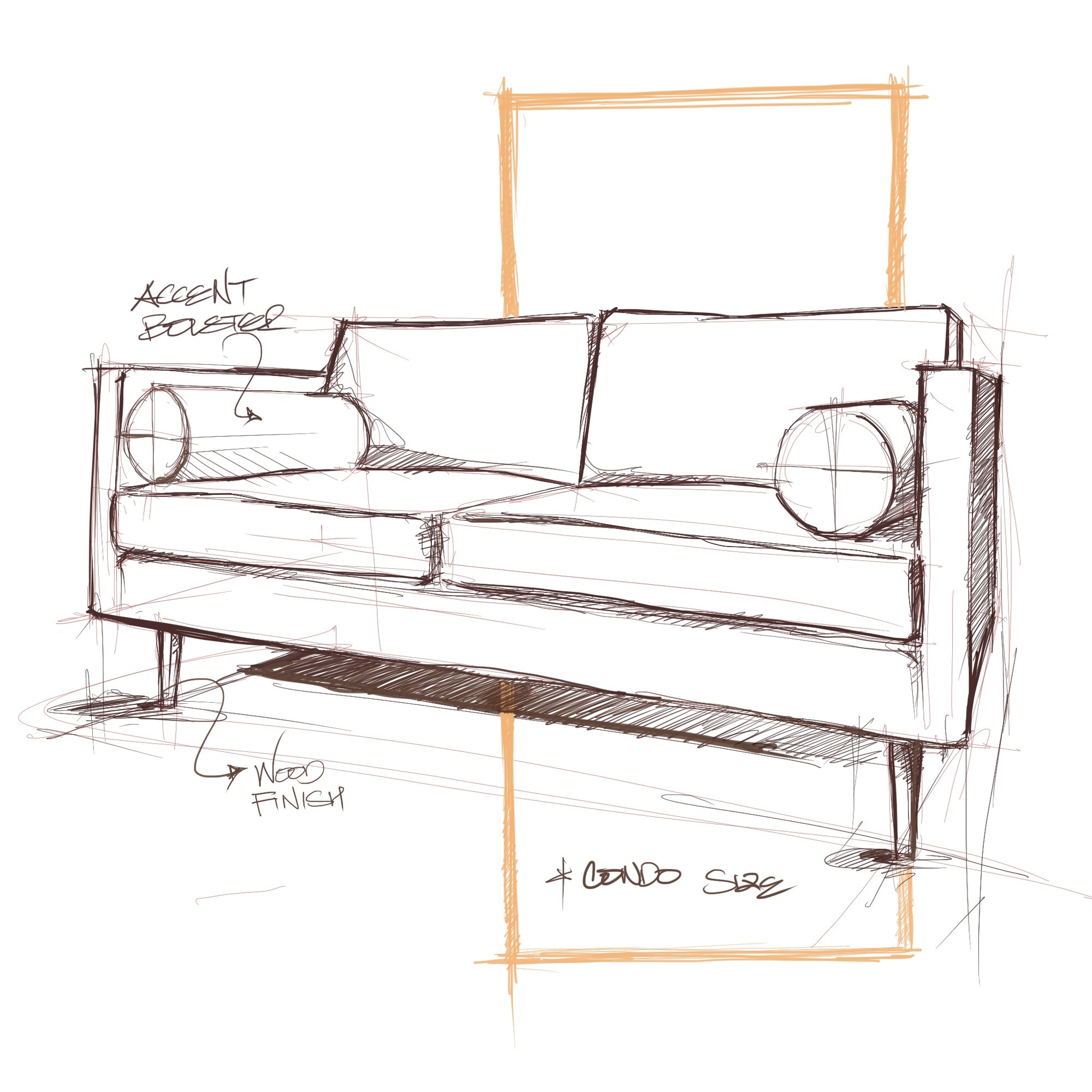


BY SERIES
BY TYPE
UPHOLSTERY

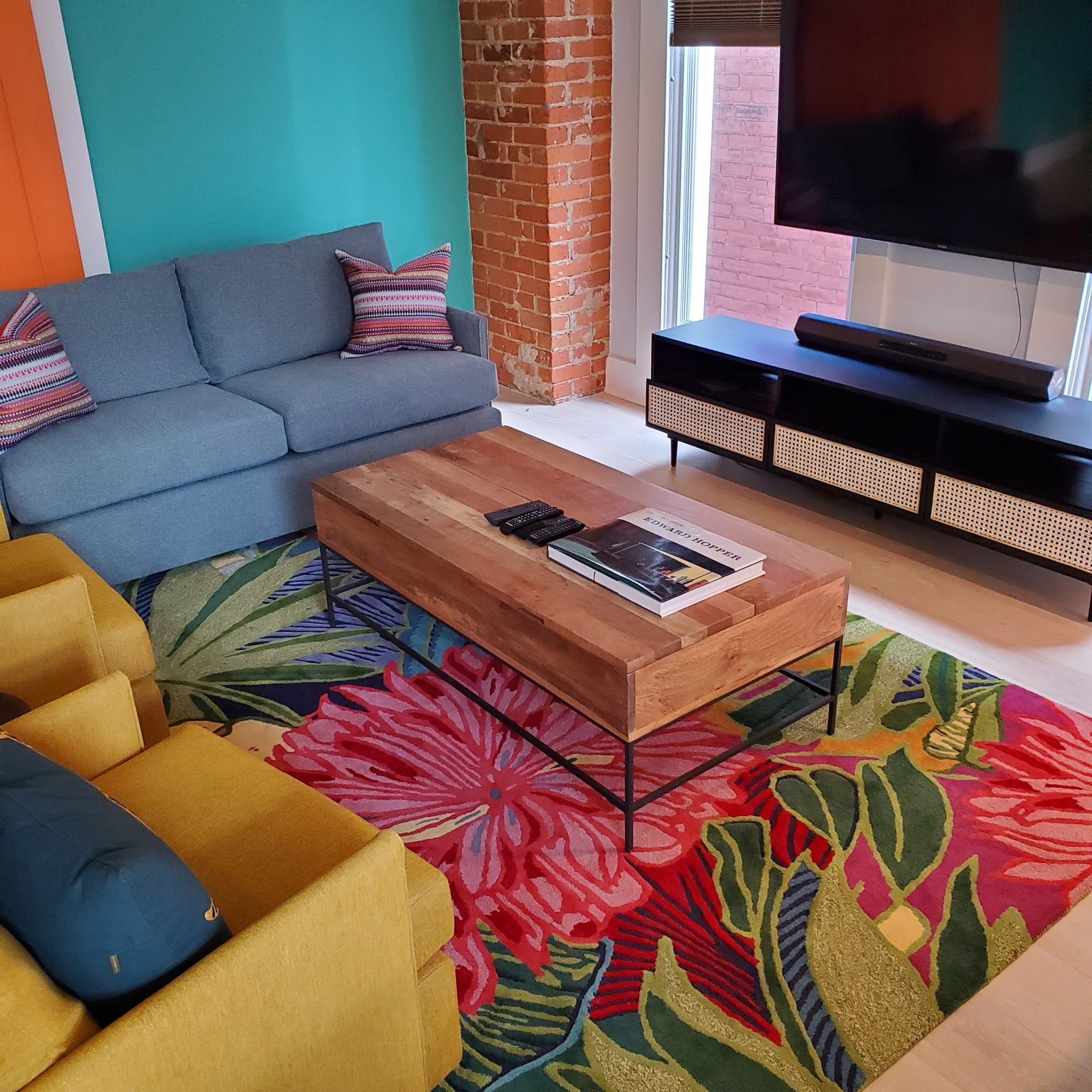
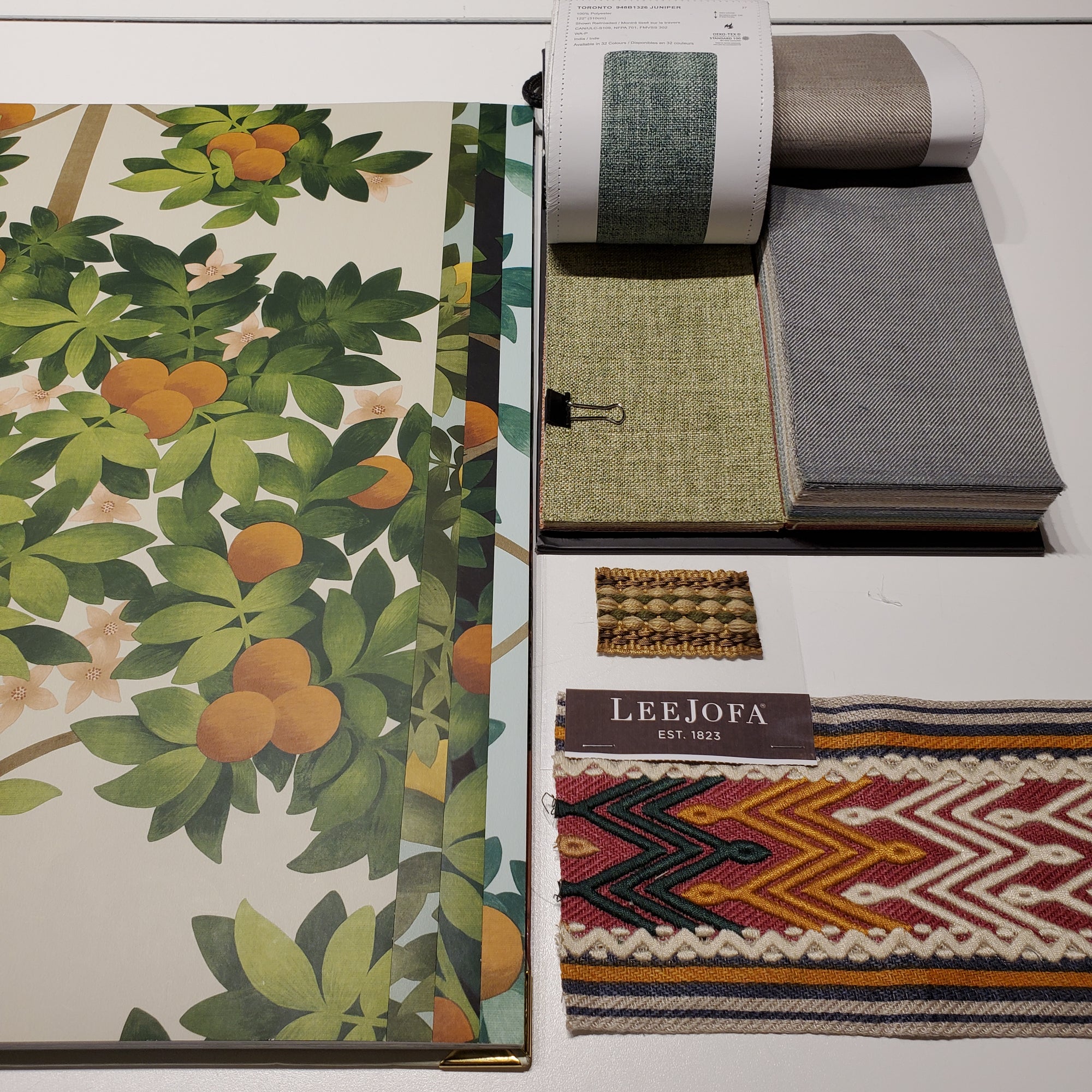
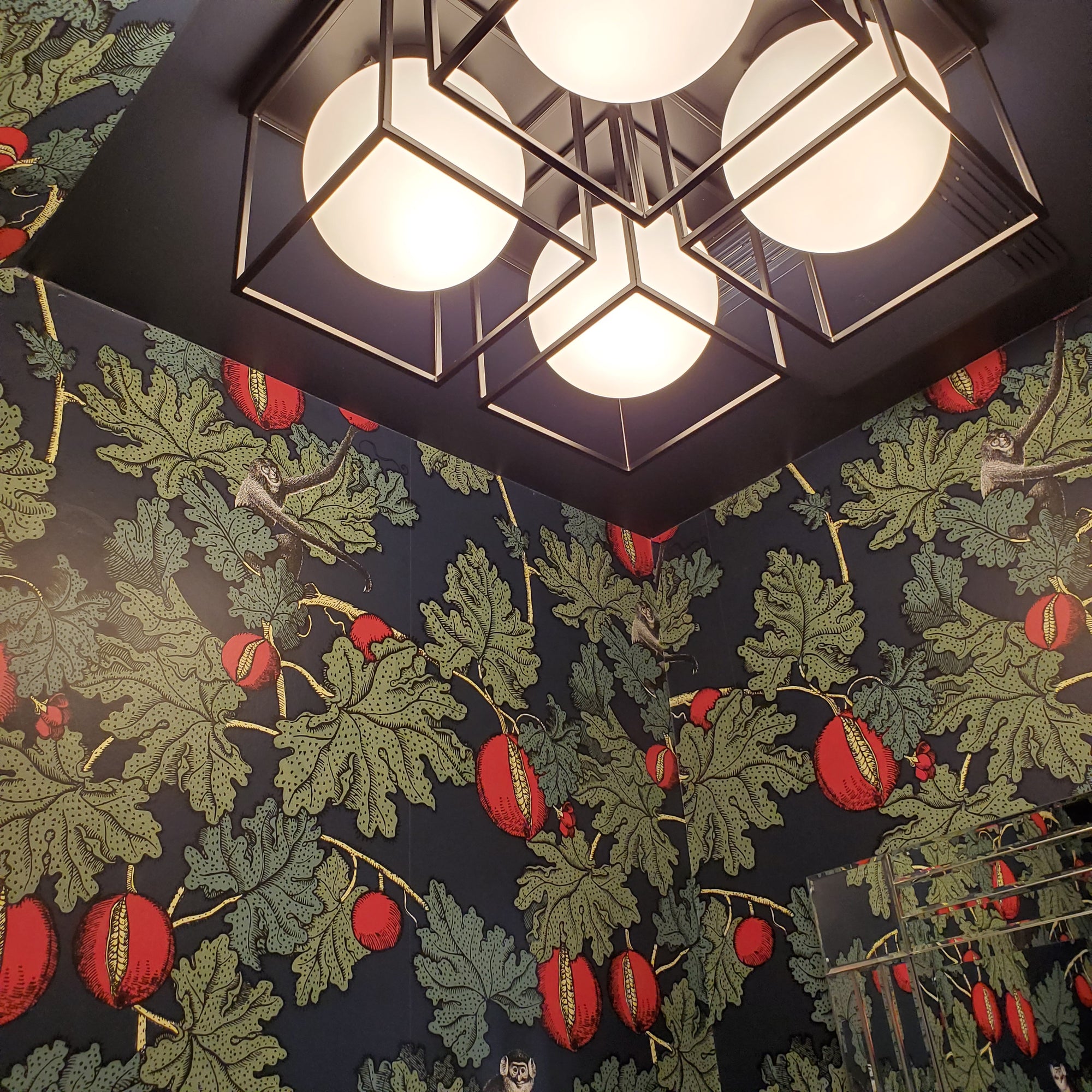
WALLPAPER & MURALS
RUGS & VINYL MATS
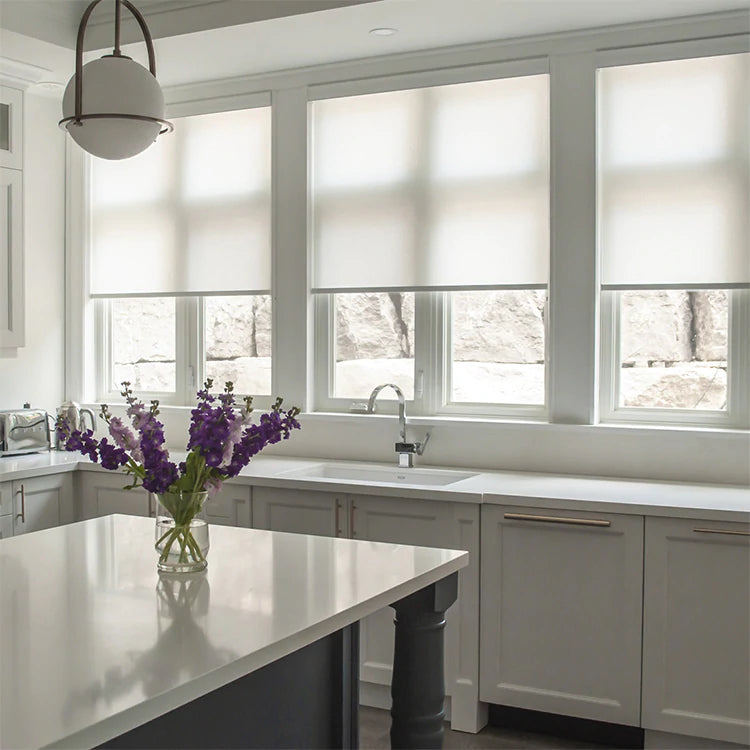
WINDOW SHADES
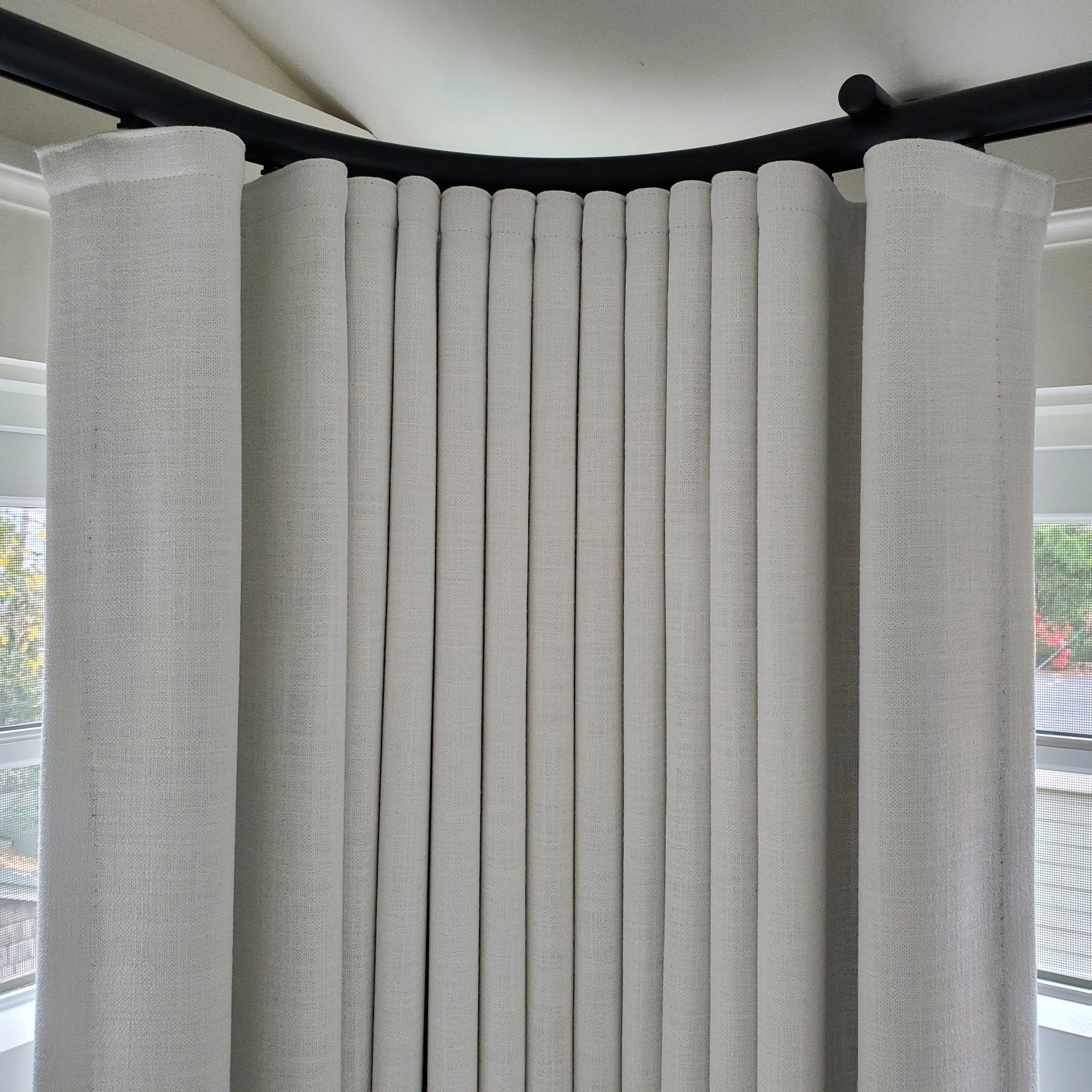
CUSTOM DRAPERY
TEXTILES & FABRICS
OUR PERSPECTIVE
OUR PROCESS
OUR PROJECTS


OUR STORY
FAQ & PROCESSES
CONTACT US
SHIPPING & RETURN POLICY

Last Updated: September 2, 2026
Maximalist home design is the intentional practice of filling a space with bold color, layered pattern, collected objects, and rich texture in a way that feels personally expressive rather than accidental. The word "intentional" carries all the weight here. Maximalism is not about owning a lot of things, it is about displaying the right things with purpose, confidence, and a clear aesthetic point of view.
At KENDALL & Co, we have been building maximalist interiors since 1998, and the most common misconception we encounter is that more always means better. It does not. The difference between a maximalist room that stops you in your tracks and one that just exhausts you comes down to curation, not quantity. Starting a maximalist home design means committing to personality-driven spaces that reject the safe, the neutral, and the forgettable. Our slogan says it plainly: we don't do GREIGE.
Bold interiors communicate identity immediately. According to research published by the Colour Research Society of Canada, color and visual complexity in interior environments directly influence mood, memory formation, and sense of belonging in a space. A maximalist room tells a story through collections, gallery walls, and layered textiles, all biographical details. People who live in richly decorated spaces often report feeling more at ease because the environment reflects who they actually are.
Curated maximalism is controlled abundance. Clutter is uncontrolled accumulation. A cluttered room has no hierarchy; everything competes for attention equally. A curated maximalist room has visual anchors, intentional groupings, and deliberate breathing room between focal points.
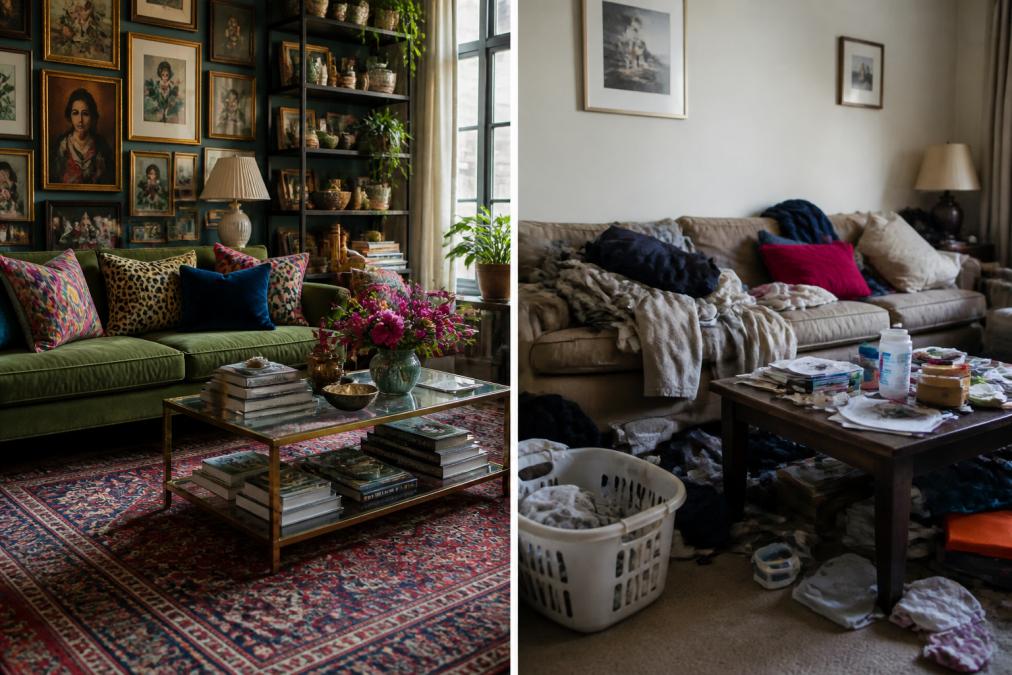
The practical test is simple: if you removed one item from a grouping and the arrangement improved, that item was clutter. If the arrangement lost something, it was curated.
The 3-5-7 rule is a display principle borrowed from visual merchandising. Group objects in odd numbers: three items on a small surface, five on a medium one, seven on a large one. Odd groupings read as intentional; even groupings read as rigid. Apply this rule to every shelf and surface, varying the height within each grouping, one tall item, one mid-height, one low, to create visual rhythm.
A neutral foundation does not mean beige walls. It means establishing a consistent base that gives your bold choices somewhere to land. This could be a warm white ceiling, a natural fibre rug in a solid tone, or a single-color upholstered sofa. These anchor elements absorb visual weight so your patterns, colors, and collections can work without tipping the room into overwhelm.
Think of it as the volume knob. The neutral foundation turns down the background noise so your statement pieces can be heard clearly. Practically, this means choosing one or two large-scale items in a restrained tone before you introduce pattern and color. The sofa, the rug, and the wall color are your foundation.
The biggest fear people bring to maximalist color palette ideas is that they will choose colors that clash. The solution is to work from a palette rather than from individual colors. Choose three to five colors and treat them as a family. One dominant color covers the largest surfaces; a secondary color appears in mid-scale elements like cushions and artwork; two or three accent colors appear in small doses.
Colors that share undertones work together even when dramatically different in hue. A deep teal, a burnt orange, and a dusty rose can coexist beautifully if all three lean warm. Pull the undertone first, then choose the hue. As the Canadian Home Furnishings Alliance's design guidance notes, undertone consistency is the most reliable way to build a cohesive color story across a complex interior.
Color alone does not make a maximalist room. Texture is what gives a room its physical presence. Layer at least four different textures within your chosen palette: something smooth, something nubby, something sheer, something pile. A velvet cushion against a linen throw against a wool rug against a lacquered side table. The colors can be similar; the textures should not be.
At KENDALL & Co, texture selection is where maximalist interiors are won or lost. The difference between a room that feels rich and one that feels flat is almost always textile variety.
Knowing how to mix patterns in home decor is the skill that separates confident maximalists from beginners. The rule is simple: vary the scale. Mix one large-scale pattern with one medium-scale pattern and one small-scale pattern. A bold floral on the curtains, a mid-scale geometric on the cushions, a fine stripe on a throw. The eye reads them as distinct because they occupy different visual frequencies.
The second variable is color overlap. Each pattern should share at least one color with another pattern in the room. This thread ties them together; without it, pattern-mixing reads as random.
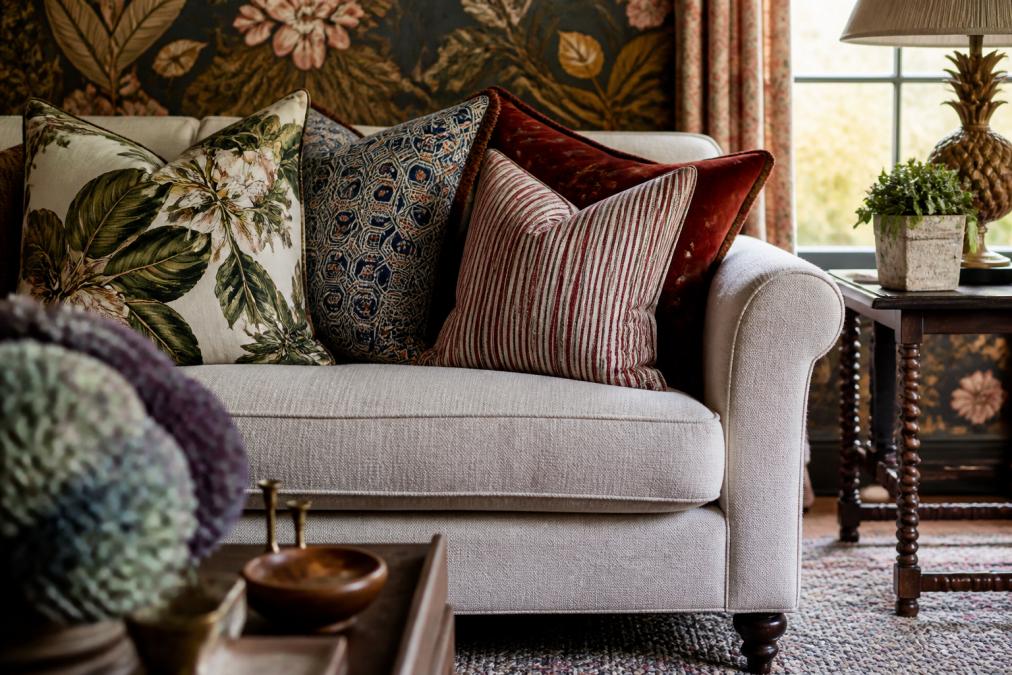
Visual weight is the perceived heaviness of an object based on its color, texture, size, and pattern density. A dark velvet chair has more visual weight than a light linen one of the same size. Distribute visual weight evenly around the room. If one corner holds a large, dark, heavily patterned piece, balance it with something of similar visual weight on the opposite side.
| Pattern Scale | Best Used On | Pairs Well With |
|---|---|---|
| Large-scale (florals, murals) | Curtains, accent wall, area rug | Fine stripes, solid textures |
| Medium-scale (geometrics, plaids) | Cushions, upholstered chairs | Large florals, small prints |
| Small-scale (stripes, micro-prints) | Throws, lampshades, trim detail | Large-scale and medium-scale patterns |
| Solid textures (velvet, boucle) | Sofa, bedding base layer | Any pattern scale |
A gallery wall is a composed arrangement with internal logic, a consistent frame finish, a shared color story, or unified subject matter. Before hanging anything, lay the arrangement on the floor and live with it for a day. Adjust until the grouping has a clear center of gravity and spacing feels deliberate.
Statement pieces deserve negative space around them. A single extraordinary object needs room to breathe. Surrounding it with too many competing items diminishes it.
:::pro tip When building a gallery wall, use kraft paper templates cut to each frame size and tape them to the wall before committing to a single nail hole. Rearrange until the composition feels right. This saves hours of patching and repainting. :::
Small spaces are not the enemy of maximalist home design. Lack of commitment is. A small room with a bold, cohesive palette reads as intentional and immersive. In a small space, go vertical: stack art high, use floor-to-ceiling curtains, and choose tall bookshelves. Vertical emphasis draws the eye upward and makes the room feel taller.
For renters, avoid permanent changes. Removable wallpaper is a genuine option for bold wall treatments. Freestanding furniture, large-scale art leaned against walls, and layered soft furnishings deliver full maximalist impact with zero damage. As the Canada Mortgage and Housing Corporation's renter guidance outlines, tenants are responsible for restoring surfaces to their original condition.
The most budget-conscious entry point into maximalist decor is textiles. Cushions, throws, and curtains transform a room faster than any other category. Secondhand markets, estate sales, and vintage shops are natural maximalist territory.
The priority order for budget-conscious maximalism:
None of these steps require a significant budget.
Maximalist interiors require active maintenance. Dust accumulates on collections. Textiles need rotation. A maximalist room that is not maintained starts to look like clutter within months.
Build a simple maintenance rhythm. Every few months, edit your surfaces: remove anything that no longer earns its place, regroup what remains, and introduce one or two new pieces to keep the room feeling alive. This is curation as an ongoing practice.
The other maintenance consideration is textile care. Rotate cushion covers seasonally, clean rugs according to their fibre content, and store seasonal textiles properly. As noted in the Textile Museum of Canada's care guidelines, natural fibre textiles require specific storage and cleaning approaches to maintain their appearance and longevity.
The goal is a room that evolves with you. Maximalist home design at its best is a living practice, an ongoing conversation between the space and the person who inhabits it.
Starting a maximalist home design requires confidence, editing discipline, and a clear sense of your own visual identity. KENDALL & Co has been helping clients build bold, curated, personality-driven interiors since 1998, with bespoke upholstered furniture, a complete textile library, custom wallcoverings, and a team that listens before it recommends. If you are ready to move beyond GREIGE, Click Here to Shop and start building a space that actually looks like you.
Maximalism follows a few consistent principles: every item should be chosen deliberately, bold color and pattern should be anchored by a neutral foundation, and scale variation keeps the eye moving without confusion. The goal is a personality-driven space that feels cohesive, not chaotic. More is absolutely allowed, but 'more' still means curated. Displaying collections in grouped arrangements, mixing old and new pieces, and layering textures are the main techniques that separate a maximalist room from an overcrowded one.
The difference between maximalist decor and clutter is intentionality. Clutter accumulates without purpose; curated maximalism places every object where it contributes to the visual story. Practical steps include editing your collection regularly, grouping items by color or theme, and leaving deliberate breathing room between statement pieces. The 3-5-7 rule, arranging objects in odd-numbered groupings, is a reliable starting point. If a piece doesn't add meaning, texture, or color to the composition, it belongs elsewhere.
Yes. Small rooms actually benefit from maximalist color because bold walls and layered textiles draw attention away from limited square footage. In rentals, removable wallpaper, textile wall hangings, and gallery walls using picture-rail hooks let you build a fully maximalist interior without permanent changes. Focus on vertical space, tall bookshelves, floor-to-ceiling curtains, and stacked art, to create visual height. Investing in one or two strong statement pieces does more for a small maximalist room than filling it with many small items.
There is no single correct maximalist color palette, but the most cohesive results come from anchoring the room with one dominant hue, then building with two or three complementary or contrasting tones. Rich jewel tones, deep teal, ochre, burgundy, forest green, layer well together and hold their visual weight against bold patterns. The key is repetition: a color introduced in the rug should reappear in a cushion or artwork so the palette reads as intentional rather than random.
Comments will be approved before showing up.