Your Cart is Empty



BY SERIES
BY TYPE
UPHOLSTERY



WALLPAPER & MURALS
RUGS & VINYL MATS
WINDOW SHADES
CUSTOM DRAPERY
TEXTILES & FABRICS



OUR PERSPECTIVE
OUR PROCESS
OUR PROJECTS



OUR STORY
FAQ & PROCESSES
CONTACT US
SHIPPING & RETURN POLICY

Last Updated: September 1, 2026
Ethical home decor is the practice of choosing furnishings, textiles, and accessories that trace back to fair labor conditions, responsible material sourcing, and manufacturing processes that minimize environmental harm. It's not a trend. It's a purchasing philosophy that asks a simple question before every buy: who made this, and at what cost?
At KENDALL & Co, we've been navigating this question since 1998, sourcing globally while staying accountable to the communities and materials behind every piece. The honest truth is that ethical sourcing isn't binary. Most products exist on a spectrum, and understanding that spectrum is what separates a conscious shopper from one who's simply been marketed to.

Ethical home decor sourcing covers several interconnected concerns: supply chain transparency (knowing where raw materials originate and how workers are treated), eco-friendly manufacturing (reducing chemical inputs, water waste, and carbon footprint), and conscious consumerism (weighing the social impact of purchases alongside aesthetics and price).
Mass production optimizes for cost and speed, typically using synthetic materials, chemical dyes, and labor sourced from wherever wages are lowest. Heritage techniques get replaced with machinery, resulting in furniture or textiles that fall apart within years, feeding a cycle of disposal and replacement.
Handcrafted and artisanal pieces operate differently. A hand-knotted natural fiber rug takes weeks to produce. Slow design prioritizes durability and quality craftsmanship over volume. The item costs more upfront but lasts longer and carries a traceable story. With mass-produced goods, those answers are rarely available and often uncomfortable.
Greenwashing describes marketing a product as sustainable or ethical without substance to back it up. A brand can slap "eco-friendly" on packaging and still source from factories with no ethical labor standards.
According to the Competition Bureau of Canada's guidance on misleading environmental claims, vague environmental claims that can't be substantiated are considered deceptive marketing under the Competition Act.
The most common greenwashing signals in home decor include vague terms like "natural" or "green" with no certification, unverifiable certifications, sustainability claims limited to packaging, no supply chain information, and "eco" collections representing only a fraction of the product range.
Use this before committing to any purchase:
If you're hitting more than two "no" answers, treat the ethical claim with skepticism. A genuinely responsible producer wants you to ask these questions.
| Claim Type | Red Flag Version | Credible Version |
|---|---|---|
| "Eco-friendly" | No detail, no certification | GOTS or FSC certification linked |
| "Handcrafted" | No maker info or origin | Named artisan or cooperative |
| "Natural materials" | Undefined, no fiber content | Specific fiber, origin, and dye process |
| "Fair trade" | Logo only, no verification | Fairtrade Canada or equivalent certification |
| "Sustainable sourcing" | Marketing copy only | Published supply chain policy |
Fair trade home accessories are products made under verified conditions that protect workers: fair wages, safe environments, no child labor, and community reinvestment. The fair trade model is particularly strong in textiles, ceramics, and woven goods.
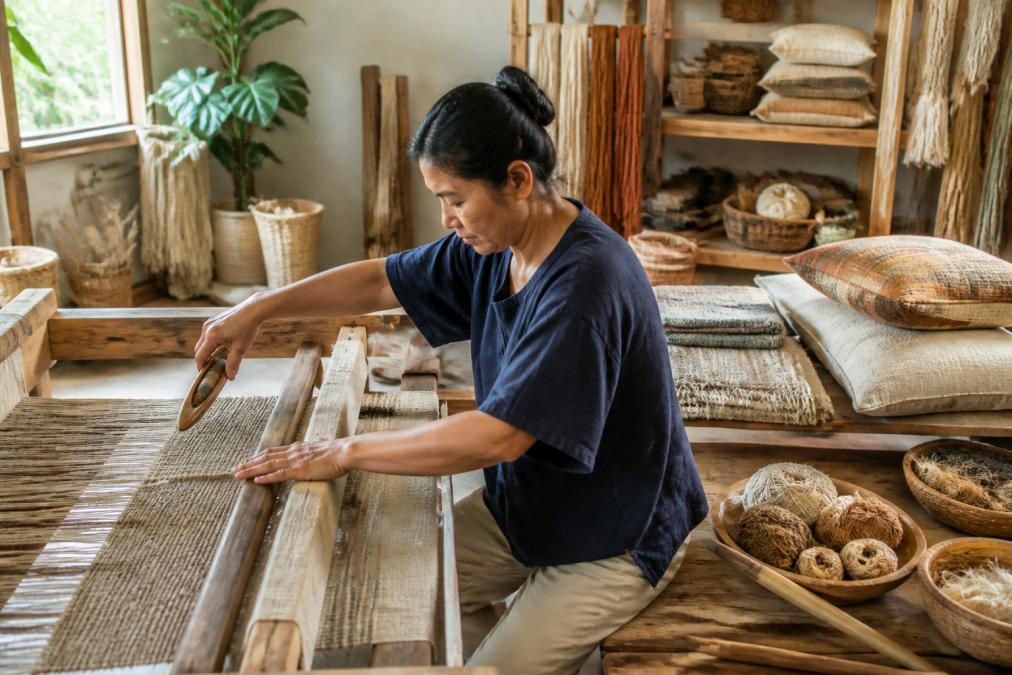
Woven textiles and rugs are among the most commonly fair trade-certified home goods. Look for products from cooperatives in regions where textile heritage runs deep.
Ceramics and pottery made in small-batch studios often come with traceable maker stories. Community empowerment is a core principle: buying from a cooperative supports the broader community.
Baskets and storage made from sustainable plant fibers represent one of the cleanest categories in ethical home decor. Many are zero-waste by design, biodegradable at end of life, and produced through cooperatives with transparent labor practices.
According to Fairtrade Canada's sourcing standards, certified fair trade products must meet specific economic, social, and environmental criteria, and producers are audited regularly. That audit trail separates a certified claim from a marketing one.
A genuinely sustainability-conscious design approach considers the full lifecycle of every material: where it was sourced, how it was made, how long it will last, and what happens when it's eventually replaced. Responsible production thinking starts at the brief stage, asking whether reclaimed wood can substitute new-cut timber, whether natural fibers can replace synthetics, and whether local fabrication can reduce carbon footprint.
Natural fibers include wool, linen, cotton, jute, sisal, and hemp. They're biodegradable, often produced with lower chemical inputs than synthetics, and tend to age well. Organic textiles certified under GOTS carry additional assurance about the entire production chain.
Reclaimed wood is the most straightforward circular economy application in home design. Salvaged timber from demolished buildings or old barns carries embodied carbon from its first production cycle, meaning no new trees are felled.
Non-toxic finishes matter because conventional stains, lacquers, and adhesives off-gas volatile organic compounds for months after installation. Water-based finishes, natural oils, and wax-based sealants dramatically reduce this impact.
As noted in Health Canada's guidance on indoor air quality and VOCs, reducing VOC exposure in residential interiors is a meaningful health consideration, not just an environmental one.
The label "eco-friendly" is self-assigned. No governing body certifies a retailer as eco-friendly the way a product can be FSC or GOTS certified. What you're evaluating is a set of practices, not a credential.
When assessing any local furniture retailer's ethical claims, look for local fabrication (lower transport footprint and more traceable), material transparency (specific origins, not just descriptions), longevity as a design principle (repair services and warranties), and upholstery customization (reducing overproduction waste).
The KENDALL & Co retail space in Cabbagetown stocks bespoke locally upholstered furniture and operates a re-upholstery workroom alongside a full textile library. That combination, custom fabrication plus repair capability, is exactly the model that responsible production thinking calls for.
The most persistent objection to ethical home decor is cost. This is true, but it's also a framing problem. Budget-conscious ethical shopping isn't about buying the same quantity of things for less. It's about buying fewer things that last longer. The cost-per-year of a well-made natural fiber rug lasting 20 years is often lower than replacing a cheap synthetic rug every three to five years.
Practical strategies include prioritizing high-use items (rugs, upholstered seating, bedding), buying secondhand first, re-upholstering instead of replacing, shopping curated collections over volume, and asking about provenance at every price point. Some of the most ethically produced goods, particularly handwoven baskets and ceramics from artisan cooperatives, are genuinely affordable.
Most guides on ethical home decor stop at purchase. That's where the conversation gets interesting. A piece can be ethically sourced and beautifully made and still end up in landfill when the owner redecorates.
The circular economy model addresses this directly. Its core principle is that materials should remain in use as long as possible, and when a product reaches the end of its useful life, its components should re-enter the production cycle.
Repair before replace. Structural damage, worn upholstery, or faded textiles are often repairable. A re-upholstery workroom can extend the life of a quality sofa frame by decades.
Donate or resell with intent. Passing a piece to someone who will use it is better than disposal. Local consignment and charitable organizations keep goods in circulation.
Compost natural materials. Genuinely biodegradable goods, untreated natural fiber textiles, plant-based baskets, and solid wood without chemical finishes, can be composted at end of life.
Ask retailers about take-back programs. Some ethical makers have begun offering material recovery programs.
As the Circular Economy Leadership Coalition of Canada's resources on material stewardship documents, the shift toward extended producer responsibility is accelerating across Canadian industries. Consumer demand for end-of-life accountability is pushing the sector in that direction.
The most honest thing about ethical home decor sourcing is this: the purchase is the beginning of the responsibility, not the end of it.
Sourcing home goods ethically is genuinely harder than buying whatever is convenient. The questions around supply chain transparency, fair trade certification, eco-friendly manufacturing, and end-of-life management require real effort to answer. KENDALL & Co has spent nearly three decades building a curated collection that takes those questions seriously, from handcrafted natural fiber rugs and bespoke locally upholstered furniture to a textile library that gives clients the information they need to make decisions they can stand behind. If you're ready to furnish your space with pieces that carry a real story, Click Here to Shop and see what responsible sourcing looks like in practice.
Ethical home decor refers to products made with supply chain transparency, fair labor standards, and environmentally responsible materials. This includes items crafted from organic textiles, reclaimed wood, or natural fibers, produced under conditions that respect workers and minimize environmental harm. It also covers responsible production practices, such as non-toxic finishes and low-waste manufacturing. Certifications like Fairtrade, GOTS, or FSC offer one way to verify claims, though smaller artisanal makers may lack formal certification while still meeting high ethical standards.
Start by looking for third-party certifications rather than relying on self-declared labels. Ask retailers directly about their sourcing: where materials come from, who makes the product, and under what conditions. Brands committed to ethical sourcing should be able to answer those questions clearly. Check whether they disclose their supply chain on their website. Vague language like 'eco-conscious' or 'green' without supporting detail is a common greenwashing signal. Supporting local artisans and independent retailers with long-standing community roots is another reliable indicator of genuine ethical commitment.
Yes. Independent design and decor shops with deep community roots tend to prioritize fair trade home accessories and handcrafted goods over mass-produced alternatives. Established retailers who personally curate their collections, shop global artisan markets, and carry items made using heritage techniques are far more likely to stock products with genuine social impact than large chain stores. Visiting the shop, asking staff about sourcing, and reviewing how a retailer describes its suppliers are practical first steps toward finding fair trade options close to home.
Prioritize natural fibers such as linen, wool, jute, and cotton certified under GOTS (Global Organic Textile Standard). For furniture, reclaimed wood and FSC-certified timber reduce pressure on old-growth forests. Look for non-toxic finishes and water-based stains, particularly on pieces used in bedrooms or children's spaces. Upcycled and biodegradable materials support a circular economy approach. Avoid products that list synthetic blends without disclosure, or that use adhesives and coatings not rated for low VOC emissions under standards recognized by Health Canada.
Comments will be approved before showing up.