Your Cart is Empty



BY SERIES
BY TYPE
UPHOLSTERY

WALLPAPER & MURALS
RUGS & VINYL MATS
WINDOW SHADES
CUSTOM DRAPERY
TEXTILES & FABRICS
OUR PERSPECTIVE
OUR PROCESS
OUR PROJECTS

OUR STORY
FAQ & PROCESSES
CONTACT US
SHIPPING & RETURN POLICY

Last Updated: September 5, 2026
Luxury custom window coverings Toronto homeowners invest in are not simply about blocking light or adding privacy; they are a defining layer of interior architecture that frames views, controls atmosphere, and elevates the entire design scheme of a room. At KENDALL & Co, we have spent nearly three decades helping clients across the city understand that window dressing is the finishing touch that separates a furnished house from a curated home.
The value extends beyond aesthetics. Professionally crafted treatments contribute to thermal insulation against Toronto's varied climate and offer UV protection for flooring, art, and furnishings. Because every window presents different proportions, light exposure, and sightlines, a one-size-fits-all approach often leaves rooms feeling underdressed or overwhelmed. Bespoke design treats each opening as an individual composition, ensuring that a bay window, a sliding patio door, and a narrow casement all relate harmoniously.
Professional window measuring is the single most critical step in achieving a flawless result, and it is the foundation of the services offered by KENDALL & Co. An in-home consultation ensures that every dimension is captured precisely, accounting for variations in frame depth, wall clearance, and operating hardware. Attempting to measure without this expertise frequently leads to ill-fitting products that allow light leaks, bind during operation, or fail to provide the intended insulation and privacy.
A professional measurement service goes beyond a simple tape reading. The technician evaluates the window's squareness, identifies obstructions like handles or locks, and determines whether the treatment should be mounted inside the reveal or outside on the wall to maximize light and perceived ceiling height. This on-site assessment also informs the design conversation, allowing the consultant to recommend the appropriate stack-back for drapery panels or the correct depth for a valance. For Toronto homeowners juggling busy schedules, this service removes guesswork and the costly risk of ordering errors.
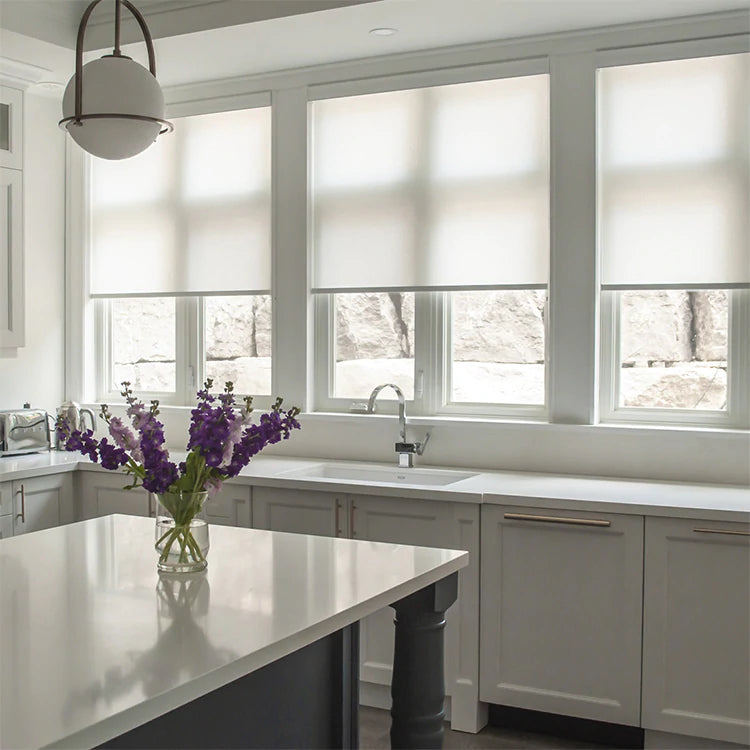
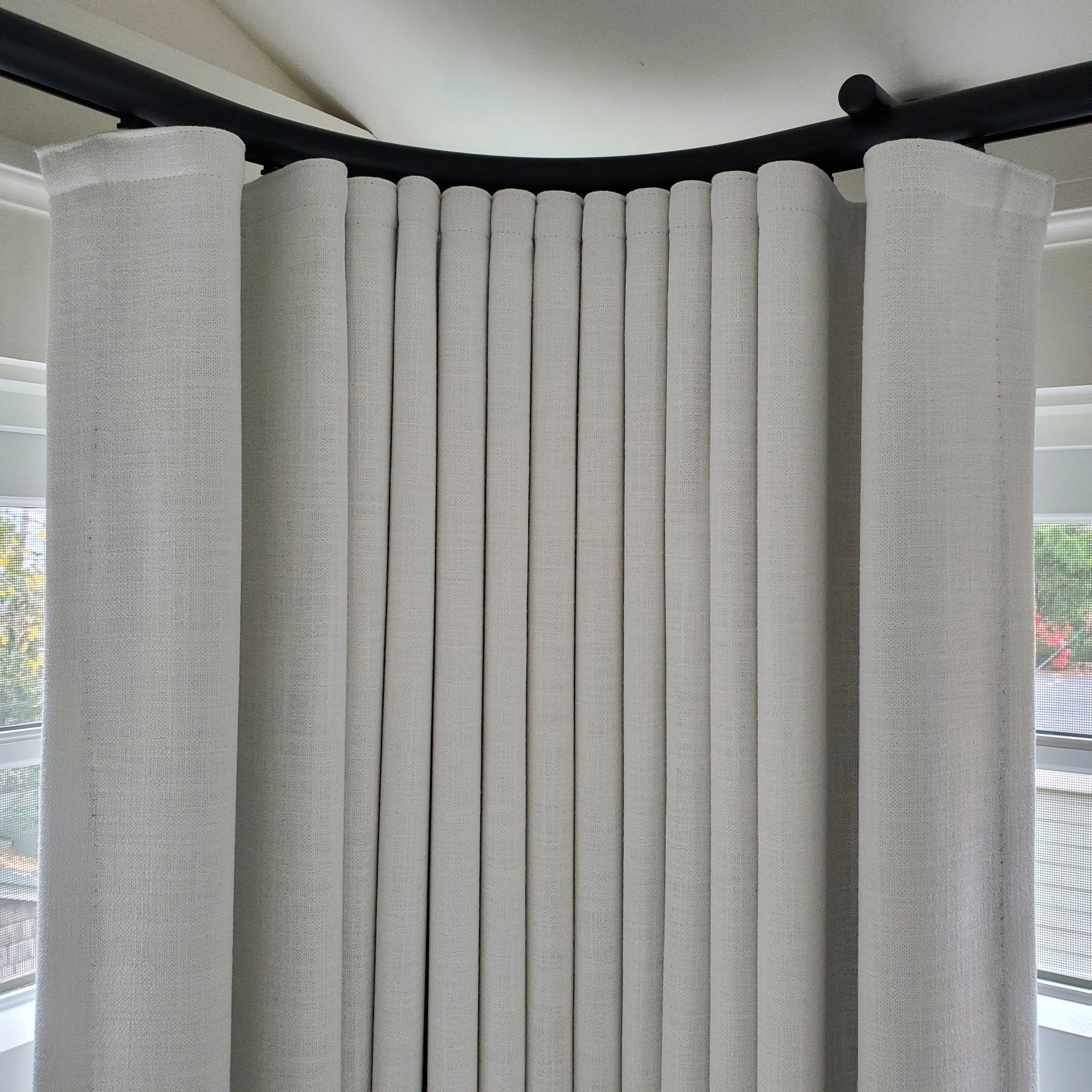
Custom drapery fabric selection is where a room's personality truly emerges. Many Toronto homes benefit from a layered approach: sheer shades that diffuse daylight during the day, paired with heavier drapes that provide room darkening and privacy when evening arrives. The key is to select textiles that align with both the room's function and its aesthetic, balancing light control with the tactile warmth that only quality drapery hardware and fabric can provide.
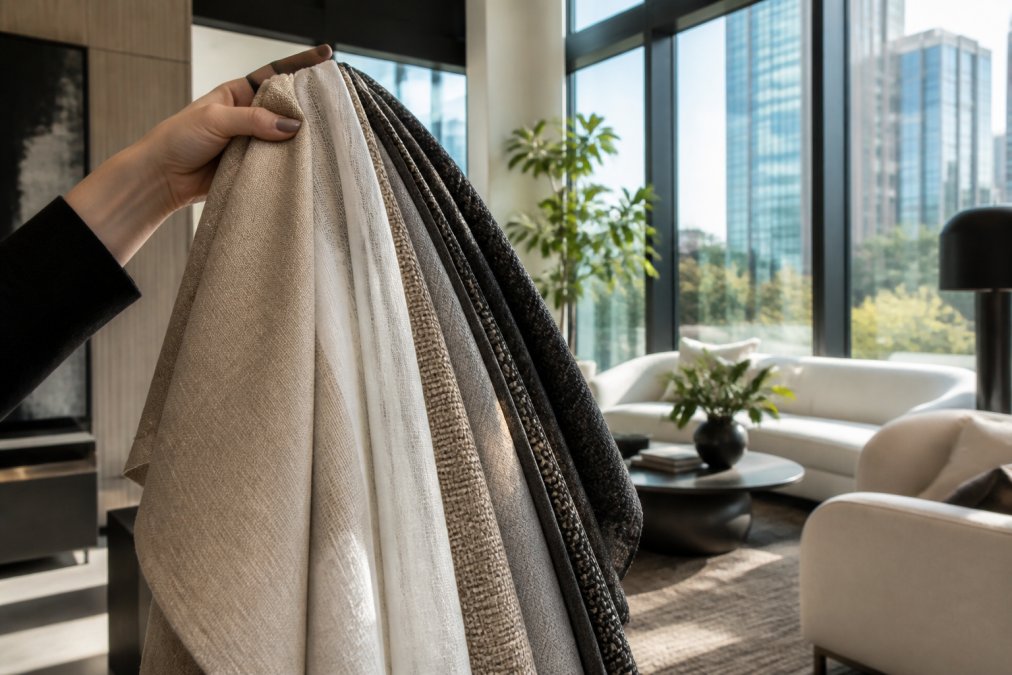
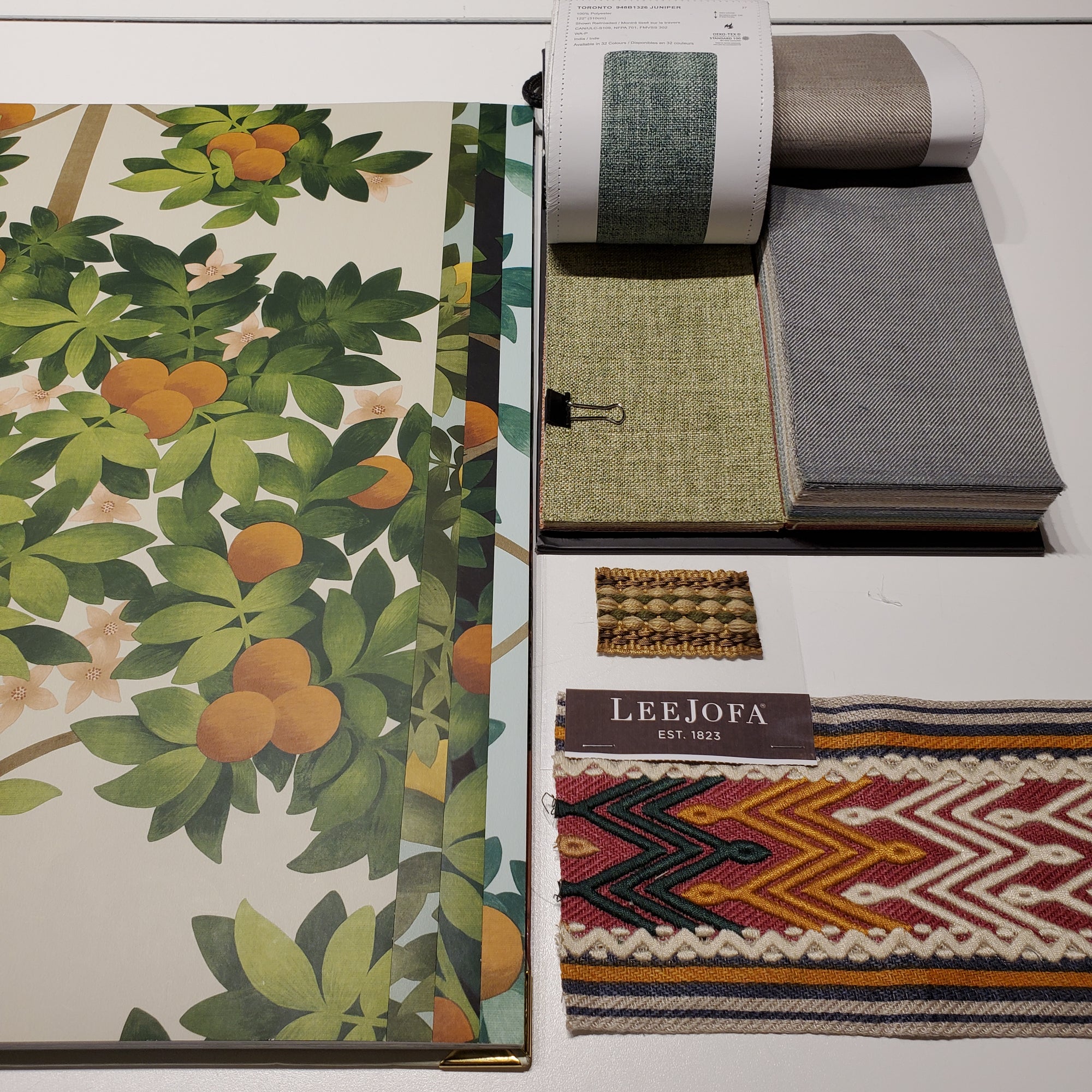
Fabric selection involves understanding textile quality, weight, and lining options. A linen-blend in a light natural tone creates an airy, relaxed feel, while a silk or velvet in a jewel tone introduces drama and sound absorbency. Blackout curtains with thermal interlining are an excellent choice for bedrooms and media rooms, offering both light blockage and energy efficiency. The lining is as important as the face fabric; a quality lining protects the drapery from sun damage and extends its life considerably.
Motorized blinds installation transforms daily living by adding convenience and a layer of home automation. These cordless systems are particularly valuable for hard-to-reach windows, large expanses of glass, and households seeking to eliminate dangling cords for safety and a cleaner visual line. With the touch of a button or a voice command, you can adjust natural light throughout the day, protecting interiors from UV fade while you are away.
The real advantage emerges with smart home integration. The difference between a motorized shade that simply works and one that truly elevates your home lies in how deeply it integrates with your existing ecosystem. Most luxury installations in Toronto are specified around one of two primary control platforms: Lutron (typically the RadioRA 3 or the higher-end HomeWorks QS systems) or Control4.
Lutron operates on a proprietary, highly reliable RF protocol called Clear Connect. It does not rely on your home Wi-Fi for day-to-day operation, which means your shades will respond instantly even if your internet drops. Lutron’s strength is its rock-solid reliability and its native integration with Apple HomeKit, Google Home, and Amazon Alexa. For a Toronto homeowner who wants a system that simply works without fuss for 20 years, Lutron is often the default recommendation.
Control4, by contrast, is a full-home automation operating system. It does not just control shades; it unifies lighting, climate, audio/video, and security into a single interface. When your shades are specified for a Control4 project, they are typically wired to a central controller rather than relying on battery power. This allows for more complex scenes, for example, a single "Good Morning" command that raises the shades in the east wing, turns on the under-cabinet lighting in the kitchen, and adjusts the thermostat. The trade-off is that Control4 requires a professional dealer to program and maintain the system, which adds to the upfront cost but delivers a level of polish that standalone apps cannot match.
For homes not ready for a full automation system, many of the shade lines we carry, including Somfy and Hunter Douglas, offer their own native apps and bridge modules, allowing for scheduling and voice control via Alexa or Google Assistant without a dedicated hub. However, Wi-Fi-dependent shades can suffer from latency or drop-off if your router is positioned far from the window. For larger projects, we typically recommend a hardwired power supply or a centralized motor control panel.
Professional installation ensures that the motors are calibrated correctly, the power supply is discreetly managed, and the systems pair seamlessly with your existing network. Homeowners who purchase "smart" shades from a big-box retailer often struggle with connectivity because the motors were never properly paired or the signal strength was not tested. A professional integrator will perform a site survey to check for RF interference and ensure that every shade responds consistently, whether triggered from a wall keypad, a smartphone app, or a voice assistant.
There is also a security angle often overlooked. When integrated with a smart home hub, motorized shades can be programmed to simulate occupancy while you are away, randomizing open and close times in different rooms to create the appearance of a lived-in home, a subtle but effective deterrent against break-ins. This is difficult to replicate with manual blinds and is a compelling reason to consider motorization for the primary floor.
Consider the future-proofing aspect. Running low-voltage wiring to the window recesses during a renovation is significantly less expensive than retrofitting later. Even if you do not plan to install motorized shades immediately, having the infrastructure in place means you can upgrade at any time without visible wires or battery packs. This detail can be coordinated during the rough-in stage and is one of the smartest investments in your home's automation readiness.
Choosing the right window covering materials involves weighing the distinct character and performance of shutters, shades, and valances against the needs of each room. Window shutters offer a timeless, architectural look with strong light control and insulation, making them a favorite for front-facing rooms where curb appeal and privacy are priorities. Their fixed louvers provide excellent thermal benefits and lasting value when crafted from quality woods or durable composites.
Shades, from sheer to room-darkening styles, provide a softer aesthetic and are available in a vast range of textures and weaves, often the best choice for a clean, uncluttered profile under drapery. Valances and cornices serve as the jewelry of the window, framing the top of the treatment to conceal hardware and add a finished, decorative layer. The decision should be guided by how you use the space: a kitchen may benefit from easy-clean, moisture-resistant faux wood blinds, while a formal dining room calls for the elegance of layered drapery over a sheer shade.
Sustainability is a consideration many design-conscious clients now bring to the table. Eco-friendly fabric sourcing involves looking for natural fibers like organic cotton, linen, and hemp, which have a lower environmental footprint than synthetics. Many mills now offer recycled polyester options for linings and blackout layers, providing high performance without the ecological compromise. Choosing fabrics labeled as low-VOC or Oeko-Tex certified contributes to healthier indoor air quality (oeko-tex.com).
At KENDALL & Co, we curate a selection that reflects a commitment to responsible sourcing without sacrificing the bold, vibrant aesthetic we are known for. This aligns with a broader movement toward longevity and quality over disposability. Investing in custom-crafted, well-made treatments means they will endure for decades, reducing the cycle of waste associated with fast furnishings.
Understanding how to care for your window coverings is essential to protecting your investment. The maintenance required varies significantly by material, and the approach that works for a cotton drape will not suit a motorized roller shade or a set of hardwood shutters. A disciplined, material-specific routine is the difference between window coverings that look tired after five years and those that retain their luster for decades.
Daily and Weekly Care for Shades and Shutters
For most shades and shutters, a weekly dusting using a soft brush attachment or microfiber cloth prevents the buildup of urban grime. For plantation shutters, dust accumulates on the top edge of each louver; a dry microfiber cloth every two weeks keeps them crisp (aol.com). Avoid wet cloths on wood or MDF shutters, as moisture can cause warping. For faux wood or vinyl, a slightly damp cloth is acceptable, but dry the surface immediately.
Fabric Care: Drapery and Sheers
Fabric treatments require a more nuanced approach. Most quality drapery fabrics should be vacuumed gently every two to four weeks using a low-suction setting with a brush attachment to remove fine dust particles that dull colors. Do not rub or scrub, as this can disturb the nap or create pilling. For spots, test a hidden area first and use a clean, white cloth dampened with lukewarm water. Avoid commercial stain removers unless labeled safe for delicate upholstery.
Professional cleaning is recommended every three to five years, depending on the environment. Homes with pets, smokers, or high urban pollution may need a more frequent schedule. Choose a cleaner that specializes in drapery and understands linings, interlinings, and trims; a standard dry cleaner may not handle the weight of a full-length panel, and improper cleaning can cause shrinkage or distortion. Always ask for a reference or portfolio.
Motorized Systems: Troubleshooting and Care
Motorized systems have their own maintenance requirements. The most common issue is not motor failure but a power or connectivity problem. For battery-powered shades, check the battery level first; lithium-ion packs typically last one to two years between charges. Use only the manufacturer-supplied charger. For hardwired systems, check the connection at the motor head and ensure the low-voltage transformer is not overheating.
If a shade stops responding to a remote or app, the issue is often a lost RF signal or a de-synced remote. Most systems have a simple re-pairing procedure, usually a pinhole reset button on the motor or a sequence of button presses on the remote. Consult your installation manual or installer. Do not attempt to disassemble the motor housing; these units are sealed and require specialized tools.
Protecting Against Sun Damage
One of the most effective ways to extend the life of your drapery is to protect it from direct, prolonged sun exposure, which can fade even the highest quality dyes. A sheer layer behind heavier drapes diffuses UV rays before they hit the face fabric. For rooms with intense afternoon sun, consider a UV-resistant lining on the back of your drapery; these linings are virtually invisible from the interior but dramatically reduce fading. For valuable antique textiles or silk drapery, a secondary roller shade between the glass and the drapery provides the ultimate protection.
Seasonal Maintenance Checklist
A simple seasonal routine can prevent minor issues from becoming major repairs. In the spring, check all operating cords and chains for fraying or tangling. In the fall, vacuum the top of drapery headers and window sills. For shutters, inspect hinges and tension screws annually. For motorized systems, test each shade at the beginning of the season. Addressing minor issues promptly protects the functionality and appearance of your window dressings for the long term.
Choosing the perfect window coverings is a journey that balances aesthetic ambition with practical performance, and it begins with a conversation about your space, your light, and your lifestyle. The most successful outcomes happen when expert guidance meets personal vision. Whether you are drawn to the clean lines of motorized shades, the classic elegance of drapery, or the bold statement of a maximalist valance, professional insight makes the process seamless and rewarding.
For over 25 years, the KENDALL & Co team in Cabbagetown has helped Toronto homeowners and businesses navigate this process with confidence. Our interior design studio houses a complete library of textiles, fabrics, trims, and tassels, allowing you to see and feel the quality of every option in person. We invite you to visit our retail space and explore the possibilities for your home, where our experienced team is ready to assist with everything from fabric selection to professional installation.
Motorized systems and eco-friendly fabrics lead the trends. Layered treatments, such as sheer shades under custom drapery, add depth and flexibility. Bold colours and textured textiles also replace plain neutrals, letting window coverings act as a focal point rather than background.
Start with your light control and privacy needs. Blackout linings suit bedrooms and media rooms, while sheer fabrics diffuse daylight without blocking the view. For insulation, heavier wools and velvets perform best in colder months. Consider durability for high-traffic areas and ask about sustainable fibre options during your fabric selection consultation.
Off-the-shelf treatments come in standard sizes and limited fabrics, often leaving gaps or requiring compromises. Custom options are measured and made for your exact window dimensions, ensuring a precise fit and polished look. Professional measuring eliminates guesswork, and you choose from a far wider range of textiles, colours, and motorization features.
Yes. Quality window treatments rank among the few interior upgrades that buyers notice immediately. Custom shutters and drapery signal attention to detail and can improve energy efficiency through added insulation. While the upfront cost is higher than store-bought alternatives, the durability and timeless appeal often deliver a strong return when you sell.
Transforming your windows is about more than a purchase; it is about crafting a space that reflects your personality and enhances your daily comfort. KENDALL & Co offers a full suite of services, including custom drapery, motorized blinds, and professional wallpaper installation, all tailored to your individual needs. Get started with KENDALL & Co and discover how our bespoke design approach can turn your windows into the highlight of your home.
Comments will be approved before showing up.